Technological Doping: Innovation or Cheating?

Introduction

Doping and sports are intertwined since the first organized sporting events. This developed a central issue that sporting organizations have been trying to overcome, the loss of sports integrity. The unique selling point of sport in societies is its unpredictability. Doping provides a competitive advantage which, aside from being unethical when discovered, diminishes this uncertainty of outcomes, resulting in fan frustration and loss of interest.


In recent years, with tests for doping becoming more accurate and strictly regulated, perpetrators have developed new ways to overcome testing. One of the most controversial scandals has been the state- sponsored Russian doping scandal. Another less known development in recent years has been the rise of ‘technological doping’; which refers to enhancing an athlete’s performance through the use of new technological equipment. This has been subject to many controversies as the equipment give athletes an increased performance, due to the material and the technology behind it, the most prominent examples being the Nike Vaporfly, the Speedo LZR full-body swimsuit and the Nike Alphafly.

Should these technological advancements be considered ‘technological doping’?

In 1936, the first athletics shoes were introduced, and from that point onwards sporting companies started to develop new technologies in order to support and improve athletic performance. In those instances, these developments were not considered as ‘technological doping’ as they were not deemed threatening to competition, but rather seen as innovative. This begs the question; should ‘technological doping’ be treated as a new paradigm of doping, or as pushing the limits of human performance by elevating the attainable standards in sporting competitions?


When Speedo revealed its LZR swimsuit in the 2008 Beijing Olympics, the product was within the guidelines set by FINA. It led athletes to break world records due to the aquadynamics in the non-textile material used. Following these events, FINA developed new regulations for competition swimsuits concerned with the material used in production, stating that a swimsuit cannot aid an athlete’s “speed, buoyancy and endurance”. These new regulations rendered the Speedo LZR non-compliant with FINA’s regulations. The main point of controversy is that FINA did not foresee the technological development, and result deemed a previously legal technology illegal.


The Nike Alphafly controversy is another key example of this debate. In 2019, Eliud Kipchoge broke the two- hour marathon barrier wearing Nike Alphafly shoes. These shoes featured advanced technology, including multiple carbon plates and thick midsoles, leading to debates about unfair advantages. In response, World Athletics introduced regulations in January 2020, limiting shoes to a single carbon-fibre plate and a midsole thickness not exceeding 40mm, effectively banning the original Alphafly design from elite competitions. This regulatory change highlights how sporting authorities struggle to keep pace with rapid advancements in sports technology, often reacting to innovations only after they disrupt competition standards.


Hence this raises the problem that, due to these technological advancements, sporting federations are unsure of the externalities, and the impact they may have on the integrity of the sport. This results in a dichotomy for the sports industry. Sporting manufacturers are bodies which contribute to the creation of the competition, as without them no equipment would be available. These base their core values on innovations and, as Porter states, innovation is achieved through ‘economic growth, productivity growth, economic prosperity & an International Competitive Advantage of nations, regions and firms’. For this reason, governing bodies should encourage innovation, rather than resisting them. This situation shows how a sporting company managed to produce a better product than its competitors while in line with regulations, but the external environment was not ready for it, deeming the product a failure.

A central topic is the distinction between integrity and commercialization. Sports integrity is defined by the notion of fair play, having compassion for others, responsibility and honesty in adhering to rules. However, there are contradictions when comparing this notion to the definition of ‘sport’, where “competition” is a central part of the definition. From a certain perspective, competition and compassion are opposites and cannot co-exist. We know this is not true, which is what ‘Fair Play’ is all about; promoting the idea that an athlete behaves with higher integrity to set an example of sportsmanship. But, in reality, their ultimate goal is to win. As such, sports equipment producers are fulfilling their function by providing the professional sporting world with equipment that will allow for superior performance. The Speedo LZR was complying with FINA’s regulations, the notion of sports integrity and the definition of ‘sport’. Speedo’s concept of increasing aquadynamics is the same as the 2013 ‘S-Works Evade’ aero helmets which improve a 200m sprint at 1000 Watts by 2.6 meters. The same goes with the Nike Vaporfly, which guarantee that in each step an athlete makes, less energy is lost compared to normal shoes. These products do not push the athlete’s internal performance like prohibited substances do, but rather, they reduce detrimental external factors to performance. Thus sporting federations, instead of adapting to the externalities or preventing them by changing the policies of what is allowable in sport, rather opt to ban them.

How can we account for these “performance-enhancing” technological advancements in the future of sports regulations?

Sporting organizations and federations should consider reviewing the policies and laws related to the concept and definition of “performance-enhancement”. Sporting outcomes are uncertain, and that is what attracts the audience. Both athletes and equipment manufacturers are essential in maintaining this uncertainty of outcome. It is with no surprise that sport is also being affected by the innovation brought about by the dynamic, ever-changing state of the world today, thus it should adapt rather than resist.


In order to reduce controversies and improve the competition standards, WADA alongside with sporting federations, should develop an external technological doping committee, which specifically reviews consensual rules for regulating technological doping. This allows for the sports integrity to be preserved but at the same time it accounts for the role of innovation. Once a new technology will be launched, depending on how competition-stifling it is, these committees will have to meet in order to decide whether it complies with the regulations. By doing so it will assure consistency in technological doping standards, set by a central organization without having different federations dealing with it in different ways, allowing for innovation to be adopted rather than rejected.

Project Red Card: The Fight for Footballers’ Data Rights

Introduction

In recent years, the overlap between data protection law and the sports industry has become an increasingly significant issue. One of the most notable legal battles in this domain is Project Red Card, a group of claims initiated by former football manager Russell Slade, more than 850 current and former Premier League, English Football League, National League and Scottish Premier League players, and a global sports data company against gaming, betting, and data processing companies over the alleged unlawful use of players’ personal data.

The Background: Data Protection and Ownership in Football

The controversy surrounding the exploitation of personal data gained momentum after the Cambridge Analytica scandal, where it was revealed that Facebook had been harvesting and providing personal data to third parties without explicit user consent. This scandal highlighted the importance of data rights and the necessity for stringent data protection laws.


In the case of Project Red Card, the core issue revolves around the tracking and use of football players’ performance data without their consent. Currently, individuals do not technically own their data, but they do have data rights under laws like the General Data Protection Regulation (GDPR), which require organisations to obtain explicit consent before processing personal data for commercial purposes. The lawsuit argues that gaming and betting companies have been using players’ performance data, including statistics such as passing accuracy, speed, and shooting accuracy, without consent and for commercial gain.

Key Legal Issues Raised

Lack of Transparency

Players are often unaware of who collects their data, how it is processed, and who profits from it. While they may sign contracts covering image rights, their personal performance data falls outside those agreements.

Absence of Consent

Data protection law requires companies to have a lawful basis for using personal data, typically through explicit consent. Most players, however, have never been asked for permission regarding the use of their performance data.

Sensitive Data and Profiling

Some of the data collected, such as cardiovascular measurements and biometric tracking, could be classified as sensitive under GDPR, which provides stricter protections for such data. Betting and gaming companies use this data to create detailed player profiles, potentially impacting contract negotiations and player evaluations.

Employment Contracts and Power Imbalance

Under GDPR, employees cannot freely consent to data collection due to the inherent power imbalance between employers and employees. This means that even when clubs request consent, it may not be considered legally valid.

Financial Implications and Compensation

One of the primary objectives of Project Red Card is to secure financial compensation for football players whose data has been used unlawfully. Since claims can be taken back up to six years under the statute of limitations, the potential financial impact is substantial, possibly amounting to hundreds of millions of pounds.


Beyond compensation, the case could lead to regulatory changes, such as new licensing laws governing the collection and use of player data. This would create a more transparent system where players can choose whether to allow data collection and, if so, receive compensation for it.

International Comparisons: How Other Leagues Handle Data Rights

The issue of athlete data rights is not unique to the UK. Major sports leagues in the United States have taken varying approaches to handling player data:

  • NBA: The NBA has a Collective Bargaining Agreement that includes specific provisions on data protection. It even imposes a $250,000 penalty on teams that use biometric data in contract negotiations.
  • NFL: The league sells player data through a partnership with Zebra Technologies. However, players themselves cannot individually sell their own data, although they do receive a share of the revenue.
  • MLB: Players can choose whether or not to have their data tracked and have full access to their personal data.

These examples illustrate how structured agreements can ensure fairer treatment of athletes’ data rights.

The 2022 FIFA World Cup: A Case Study

Despite the growing awareness of data privacy in sports, the 2022 FIFA World Cup in Qatar introduced new technologies that continuously collected player data. In-stadium cameras and sensors installed in footballs tracked movements from 29 different points on each player’s body. FIFA justified this system as a means to enhance the understanding of the sport, yet it reignited concerns over data privacy and the lack of clear regulations governing the use of player data.

In response to these concerns, FIFA and player unions signed a charter guaranteeing privacy protections similar to GDPR. However, there are still significant gaps in transparency, and players remain uncertain about how their data is stored and who has access to it.

The Future of Athlete Data Rights

Project Red Card aims to raise awareness about data rights in sports and establish legal precedents for fair compensation. Some potential outcomes include:

  1. Increased Control for Players
  2. New Licensing and Compensation Models
  3. Regulatory Precedents
  4. Stronger Data Protection Measures

The FIFPRO and Sports Data Labs Partnership: A New Era of Player-Controlled Data

Recognizing the growing concerns surrounding the unauthorized use of player data, FIFPRO Technologies BV, a division of the global players’ union FIFPRO, partnered with Sports Data Labs (SDL) to launch a groundbreaking technology platform. This initiative aims to provide professional footballers with control over their personal data and create opportunities for them to monetize it.

The platform functions as a secure repository where players can store and manage various types of performance data, including physiological metrics, medical records, and statistics collected through wearable devices. By granting players full visibility and control over their data, the platform ensures that they can make informed decisions about its use.

Beyond data management, this initiative introduces a consent-based revenue model, allowing athletes to selectively share their data with approved third parties for commercial purposes. This approach aligns with ongoing efforts, such as Project Red Card, to promote fair compensation for players and establish industry-wide standards for data protection.

By creating a structured ecosystem that fosters collaboration between players, clubs, leagues, and commercial partners, the FIFPRO-SDL partnership represents a significant step toward ethical data practices in professional sports.

Conclusion

The legal battle over the use of athlete data is just beginning, and Project Red Card represents a critical turning point in sports law. As the commercial value of data continues to rise, ensuring fair treatment and transparency in data collection and usage will be essential. While the sports industry has historically been slow to address these concerns, the outcome of Project Red Card could shape the future of data rights in football and beyond, setting a precedent for fair compensation and ethical data practices in professional sports.

The Danger to Competitors in Sport: A Problem Beyond the Elite

Introduction

The tragic deaths of Matilde Lorenzi and Matteo Franzoso on ski slopes, and the fatal injury suffered by Billy Vigar at an Isthmian League Premier Division match, were not isolated incidents. They form part of a broader pattern that runs through many sports: while elite competitions are governed by robust safety standards, lower-tier events and training environments are often left dangerously exposed.

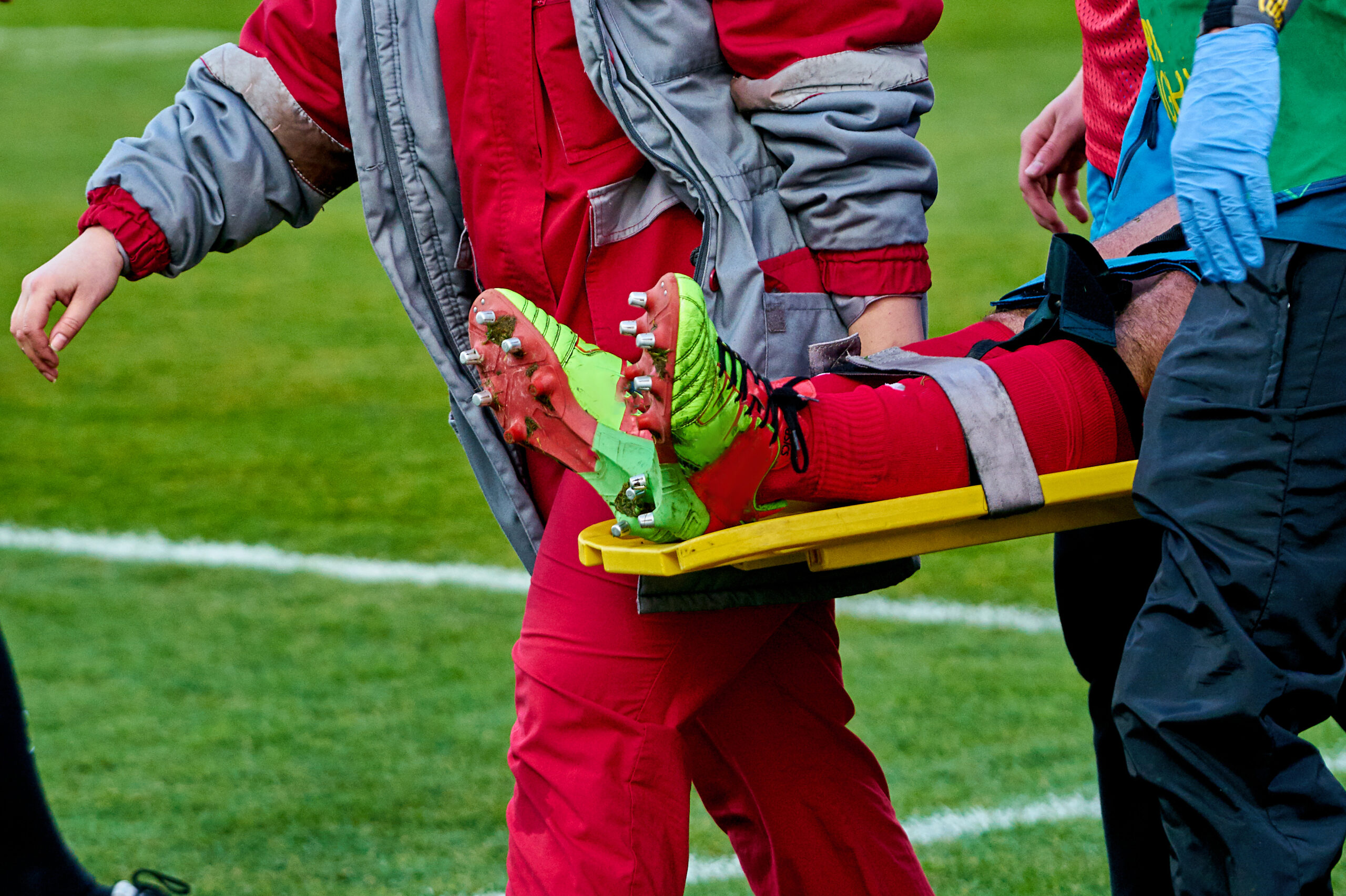
These tragedies, together with the serious injury of Samuel Asamoah after colliding with pitch-side LED boards in China’s second division, highlight a regulatory gap that is both obvious and preventable.

Unequal Safety Standards in Sport

At the top of the sporting pyramid, infrastructure is designed to manage risk. Courses and pitches are inspected, barriers are padded and recessed, run-off areas are carefully measured and medical teams stand ready. This is the result of binding regulations, insurance requirements, and commercial imperatives tied to elite competition.

Outside the spotlight, the picture changes dramatically. At lower league football matches, youth tournaments, lower-category skiing events and training camps, safety measures are often minimal, outdated, or entirely absent. The risk to participants, however, does not change. The human body does not move more slowly or less forcefully simply because an event lacks television coverage or a title sponsor. A collision at 80 km/h on a training slope or into a concrete wall at a lower league football ground is just as devastating as it would be at the Winter Olympics or in the Premier League.

This uneven landscape is precisely where tragedies tend to occur. Matilde Lorenzi’s fatal fall occurred at the end of the descent, in a section not considered particularly dangerous, yet no safety barrier had been placed there. Matteo Franzoso suffered a fatal head injury after hitting a fence several meters away from the training piste. Billy Vigar collided with a solid concrete wall at pitchside. Samuel Asamoah’s neck injury came after hitting an LED board that was placed close to a high-speed playing area.

In all four cases, the regulations failed to require infrastructure robust enough to protect them. In this piece, I use skiing and football as case studies to show how safety standards tighten at the elite level but loosen in training and lower-tier competition, why that gap exists, and what regulators can do to reduce the risk of serious injury.

Skiing: Strong Rules, Weak Reach

The Fédération Internationale de Ski et de Snowboard (FIS) has developed some of the most technically detailed safety regulations in sport. Its International Competition Rules (ICR) set out in detail the protective measures required for all events in the FIS calendar, such as the Alpine Ski World Cup.

Article 702.3 of the ICR provides that obstacles against which competitors may be thrown “should be as well protected as possible with high safety nets, safety fences, pads or similar means if necessary, together with slip-sheets.” This provision establishes a clear expectation that dangerous areas must be properly safeguarded.  However, while the word “should” establishes a default duty, the phrases “as possible” and “if necessary” introduce the significant element of discretion to event organisers. This flexibility, which hinges on the organiser’s judgment of feasibility and hazard level, can result in uneven and, at times, dangerously inadequate levels of protection.

The subsequent provisions of the ICR set out how these protections are to be implemented and monitored in formal competitions and official training sessions. Article 703.2.1 requires all protective installations to be in place before the Jury inspection for Downhill events. The Jury is the panel of technical officials appointed by FIS and the race organiser to supervise the race, assess whether the course and safety installations comply with the ICR, and, where necessary, require changes before training or racing can begin. Article 703.2.2 adds that, “before the start of training on the first official training day, there must be an inspection by the Jury with the technical advisor, if present, and generally also in the presence of the team captains or trainers.” In addition, Article 704.4 requires the presence of adequate medical services during official training sessions.

Together, these provisions create a comprehensive regulatory structure for “all events in the FIS calendar”: homologation of courses, installation of multiple net layers and padding in high-risk areas, and formal inspections before training and racing. Yet, this structure only applies to competition courses and official training linked to those FIS calendar events.  It therefore does not govern by default pre-season training camps or lower-category races (for example, regional junior events sanctioned only at national level), even though these are where many athletes spend most of their time on snow.

The practical consequences of this regulatory gap were tragically illustrated in the deaths of Matilde Lorenzi and Matteo Franzoso. In both cases, the athletes were on non-competition training runs rather than on courses homologated for events in the FIS Calendar: Matilde Lorenzi was taking part in a giant-slalom training session in Val Senales (Italy), while Matteo Franzoso was in pre-season speed training in La Parva (Chile). Both athletes were skiing at speeds comparable to those seen in elite competitions, but the infrastructure around them was drastically different. Matilde Lorenzi’s fall occurred in a section of the slope considered low risk, where no protective barriers had been installed and nothing mitigated her fall. Under FIS event rules, even ostensibly “low-risk” sections of a homologated course are still subject to a systematic risk assessment by the Jury, with nets or padding installed where a fall could carry an athlete towards fixed obstacles. In the absence of that process, the area into which she fell had simply not been treated as a zone requiring protection. According to the Italian Winter Sports Federation (FISI), Matteo Franzoso crashed through two rows of netting and hit a fence off the course which had no padding. Outside FIS-calendar competitions and official training on the homologated race piste, there is no single set of FIS rules that universally governs how safety nets must be installed for training or lower-level events. Instead, safety is shaped by a patchwork of national federation regulations, local law and manufacturers’ guidelines, which typically expect training to be run under race-equivalent protection, especially in high-risk zones.

Had these runs taken place at elite level, homologation requirements would have mandated multiple layers of nets, sufficient run-off areas, padding on impact zones, and pre-training inspections. However, as their training fell outside the regulatory perimeter, those protections were not applicable.

Football: Minimal Standards at the Base of the Pyramid

Football’s structure differs from skiing’s but suffers the same weakness at thebase of its ecosystem. Premier League and EFL stadiums must meet high safety standards for perimeter structures, advertising boards, and medical coverage. However, at lower league levels, the requirements are minimal.

The FA’s Stadium Accreditation Criteria (often referred to in practice as the FA Ground Grading framework) set out the facility standards for clubs operating at, or seeking promotion within, Steps 1 to 6 of the Men’s National League System, with grade-specific requirements linked to each step. Chichester City, the club Billy Vigar was playing for at the time of the incident, competed in the Isthmian League Premier Division, which is classified as Step 3 of the NLS. Step 3 clubs are therefore assessed against the Grade 3 criteria. Under the FA criteria, the required “run-off” is a minimum of 1.83 metres between the touchline/goal line and the pitch perimeter barrier (with a higher minimum applying at Grade 1). The criteria also require the pitch perimeter barrier to be of sound construction (e.g. concrete and steel) and free from sharp edges. However, the criteria do not expressly prescribe that rigid perimeter structures must be padded or fitted with energy-absorbing materials. Instead, the document includes advisory provisions emphasising that clubs should fix infill panels and sponsors’ signage in a manner that avoids injury to players.

This regulatory gap is compounded by the Safety of Sports Grounds Act 1975, which applies only to stadiums over a certain capacity. The legislation was designed to address crowd safety at larger venues rather than player protection at lower levels of the game. As a result, while higher-capacity grounds must obtain safety certificates and comply with stricter infrastructure requirements, the vast majority of lower league venues fall entirely outside this framework. In practice, this mirrors the position in skiing, where homologation rules apply only to top-tier events, leaving most lower-level competitions and training environments exposed to similar risks with far weaker safeguards.

Billy Vigar’s fatal collision with a concrete wall at an Isthmian League Premier Division match, was a consequence of this regulatory gap. Technically, the venue satisfied minimum distance requirements. However, those standards are about distance, not impact. There was no padding, no energy absorption, and no additional safety layer.

Similarly, Samuel Asamoah collided with an LED board placed close to the pitch. While details of China’s domestic regulations are less accessible in English, the fact that this hazard existed at all reflects a lack of adequate safety regulation or enforcement at lower competition levels. FIFA issues Stadium Safety and Security Regulations and technical Stadium Guidelines for its competitions, which include requirements that advertising boards must not obstruct evacuation routes or create obstacles and recommendations on distances around the pitch. Implementation of comparable standards in domestic competitions, particularly at lower tiers, is largely governed by national association and league regulations, which adopt these principles to varying degrees.

Why Lower Tiers Are More Exposed

The difference between top-tier and lower-tier regulation is driven by resources, visibility and enforcement. Elite events are shaped by broadcasting, insurance obligations and international scrutiny. Lower-level events, by contrast, are often run by small clubs or local organisers who rely on volunteer staff and operate on thin budgets. They may also be constrained by the venues available to them: many clubs play at older grounds with rigid perimeter structures or limited run-off, and many skiing programmes train on slopes that are not set up like a World Cup course. Even where safety risks are recognised, structural changes (for example, rebuilding a stand or widening a run-off area) can be financially and practically out of reach.

At this level, the binding regulatory levers are often thinner and more fragmented. In football, for example, the FA’s Ground-Grading regime for Steps 1-7 is primarily framed around minimum clearances and facility requirements, but is largely silent on impact-mitigation measures such as mandatory padding or energy-absorbing perimeter design. In skiing, the FIS ICR’s inspection and protective-installation requirements apply for FIS-calendar events and official training, but many pre-season camps and national/regional races sit outside that perimeter, leaving safety to a patchwork of national federation rules, resort operators and local practice. The gap between what is required at the top and tolerated at the base is therefore wide, and predictable in its consequences.

It is not that risks are higher at the elite level. It is that protections are lower everywhere else.

Towards a Safer Structure: Regulatory and Practical Reform

A key component of improving safety standards in sport is the ability to learn systematically from accidents and near-misses.  In both skiing and football there are reporting mechanisms at the very top level (for example, race reports and medical summaries in elite FIS events, or incident and injury reports within professional leagues) but these are often limited to more serious cases and are not applied consistently across the wider pyramid. At lower levels of competition and in everyday training, most incidents are not recorded in a centralised way. As a result, federations lack the data needed to identify recurring hazards, assess risks objectively, and implement preventive measures.

Motorsport provides a useful model. FIA-linked safety systems support structured reporting and centralised analysis of serious incidents (including defined categories such as fatal accidents, serious accidents and significant incidents). The aim is to learn from incidents systematically and translate those lessons into improved safety measures and standards, rather than to apportion blame.

The FIA compiles this information centrally and uses it to analyse patterns, detect structural weaknesses, and update safety standards accordingly. It also operates an Accident Data Recorder programme, a kind of “black box” for racing cars, which provides precise data on the forces and circumstances of each crash. This system has directly led to safer circuit layouts, improved barrier technology, and updated safety protocols. Crucially, the system is mandatory but non-punitive, designed to enhance safety rather than apportion blame.

A similar reporting framework in skiing and football would be transformative. If every serious collision with a fixed object, every high-speed fall into an unprotected area, and every medical evacuation from a lower-tier venue had to be reported and logged, national federations would quickly build a data set revealing where risks are most acute. That evidence could then support targeted rule changes, such as mandatory padding of rigid perimeter structures, revised pitch-side clearance standards, or expanded homologation criteria, and help to direct resources towards the highest-risk facilities and practices. It could also be used to prioritise education and training for local organisers, ensuring that lessons learned from one incident are not confined to a single club or region.

In short, what is measured can be managed. Without structured reporting and data-driven analysis, safety remains reactive. With it, federations can act proactively: tightening rules where necessary, supporting clubs and organisers to implement safer designs, and ensuring that the protections afforded to athletes do not depend on whether their competition happens to be televised.

International football transfers – a risky business?

The English Premier League remains one of the most attractive competitions for professional footballers in terms of the quality of football, the money on offer, the fans and the profile for players who compete in it.
We are used to seeing foreign players in England (around two-thirds of the Premier League players are from abroad), but we are increasingly seeing players from the UK ply their trade in foreign leagues. Sometimes they move to more familiar football territories such as Spain, Germany, Holland and Italy; other moves take them further afield, to places like the USA, China, Australia and Japan.

The world of international football transfers is ever-changing. More recently, developing football nations have been using their financial muscle to sign well known ‘stars’ to boost their own domestic competitions, such as the UAE, Saudi Arabia, Qatar, India, Indonesia, and Thailand. Players and their agents can earn sizeable salaries and fees in these countries, meaning players are often willing to give up a more competitive level of football for an enticing payday – particularly towards the end of their careers.

Of course, it is fantastic to see a truly global transfer market emerge. It offers opportunities to players of different levels the ability to earn well and experience a new culture. But, what are the risks?

Risky business?

Players in England are fortunate to work in a country where the employment laws provide them with good protection, the legal system is fairly robust, medical treatment is of the highest level and you can be reasonably confident that you’ll be paid (on time) whatever is set out in your contract.

The same cannot be said of employment contracts in many developing countries. There may be issues of systematic late payment; your contract might be terminated for no good reason; you might be sidelined without explanation in the hope you’ll walk away from the club if they decide you’re not worth the money they’ve committed to pay.

Won’t FIFA step in to protect the player?

It’s true that FIFA is there to try and ensure the stability of player contracts. What this means in practice is that where a player has terminated their contract with a club for ‘just cause’ (a good legal reason), you can put in a claim to FIFA. FIFA will hopefully order the club to pay you the money due under the contract. If they do, the club will be given a deadline to pay, and if they don’t, FIFA can impose sanctions such as warnings or point deductions on the club. It can be an effective means of getting paid but it can also be very slow – you might have to wait a year or more for payment; longer if the club appeals any FIFA decision to the Court of Arbitration for Sport.

Nevertheless, the FIFA route only works if your contract is solid in the first place. It won’t ‘fix’ a weak contract that allows the club to terminate for minor reasons.

What are the key things to consider?

There are all the normal contractual points to think about – and ideally with the benefit of legal advice. However, there are also issues specific to deals in developing football jurisdictions that a player and agent should have in mind:

  1. Reputation – does the club and/or country have a reputation for not paying players on time or in full? If so, raise it in negotiations and see if there’s scope for more of the money to be paid on signing.
  2. Political stability – are there political issues in the country that might affect the ability of the club to play the full term of the contract? Or, could it make it unattractive to move there at all?
  3. Health and well-being – medical care is something that is often contentious. A player might want the right to a second opinion on any important medical decisions. Disagreements over medical care can lead to a standoff between player and club, so the process should be clear from the start.
  4. Protect your income – one of the key reasons players choose to move to a developing football nation is for the money. Therefore, it is essential that the player’s salary is protected to the greatest extent possible. So often we see employment contracts with clauses that allow the club to terminate a supposed long term deal after six months or a year, or that allow the club to reduce a player’s salary if he is relegated to their reserve team.


Lastly, it is common to be put under pressure to sign a deal quickly, whether by the club, an agent, or even a player who fears losing out. But never let that stop you from taking time out to get advice. Whatever timeframe you have is the time we will work in. It’s no overstatement to say we have saved or secured millions of pounds for players whose contracts would otherwise have left them in a vulnerable position. When you’re next involved in a potential move, get in touch. We’ll be delighted to help.

Found this article interesting?

Download our handy international transfers checklist.

Working with minors in football – a minefield?

Rising transfer fees and the importance of homegrown players means that clubs and intermediaries focus an increasing amount of time and effort on young talent. However, working with minors (being players under the age of 18) can be a minefield.


We have already seen serious penalties imposed on Premier League clubs for breaching the rules relating to minors, and interestingly, the vast majority of recent FA disciplinary cases against agents involved breaches of the rules relating to minors. In 2018, one of the top agents of the Stellar Group was suspended from intermediary activity for three months and fined £50,000 for entering into a representation contract with a player who was too young. The consequences of such a sanction could be far-reaching. If you are suspended, then any other player you represent could be entitled to terminate their representation contract with you. 


Therefore, intermediaries looking to explore this avenue should proceed with caution.

Special authorisation

Before you begin you need special authorisation from the FA to work with minors (whether for a club or a player).

You will need an Enhanced Disclosure and Barring Service check (an enhanced criminal records check), which the FA will review and approve – this can take about a month and you cannot approach a minor until you have the FA’s approval. Intermediary companies cannot apply to work with minors – applications can only be made in a personal capacity.

This is an essential safeguarding point, to make sure young players get the additional protection they need given their vulnerability – so do not overlook it.

When and how can you approach a minor?

The FA Regulations on Working with Intermediaries set out what you cannot do where minors are concerned, so if you’re going to work with young players you must familiarise yourself with these Regulations before you start.

You cannot approach a player before 1 January of the year in which they turn 16. A player is no longer a minor from their 18th birthday, so the rules do not apply from that date onwards. Therefore, it is the period between those dates that is critical for the purposes of dealing with minors. We’ll call it the ‘critical period’.

Only with the prior written permission of the player’s parent or guardian can you ‘approach’ a player during the critical period. If you then enter into a representation agreement with a minor, the parent or guardian must also countersign the agreement.

Importantly, the FA restricts both direct or indirect approaches and includes contacting a player (or a player’s family or friends) through email, text, WhatsApp or via social media. The FA can ask to see your records if they believe you have breached the Regulations.

So, now you’ve (i) been authorised to represent minors by the FA, (ii) approached the parent or guardian and been given written permission to contact the player, (iii) secured a representation contract with the player that is countersigned by the parent or guardian, and (iv) have negotiated an excellent employment contract for the player. All the boxes are ticked but…you cannot be paid for your work.

What? Did you say I can’t be paid for my work?

The Regulations prevent you from being paid during the critical period. However, so long as the representation contract isn’t terminated when the player turns 18, there is nothing to prevent you from being paid from that point onwards.

Alternatively, the Regulations allow you to be paid in instalments after the representation contract has expired, so long as the player’s employment contract extends beyond the term of the representation contract.

These issues are not straight forward, so ensure your representation contract is carefully drafted if you’re hoping to protect any payments arising from it.

What about when Wayne Rooney terminated his contract as a minor?

Under English law, when it comes to agreements with minors, intermediaries are exposed. The general rule is that unless a contract is for education, employment, or what are known as ‘necessaries’ (food, drink, clothing, medical services), anyone under the age of 18 is entitled to cancel a contract that they enter into unless they do something to ‘ratify’ the contract when they turn 18 (or shortly after). They can ratify the contract by words or actions that show they intend to be bound by it.

The leading case in this area involved a 15-year-old Wayne Rooney who found himself at the centre of a dispute between two intermediaries. In short, the court found that whilst a contract with a football intermediary may add value to a player’s career, it is not for ‘necessaries’, education or employment. This, the court found, is contained in the contract with the football club, which enables a player to train and earn a living. Consequently, Rooney was entitled to terminate the representation contract in question.

The things you really cannot do

It is widely acknowledged that some of the worst intermediary behaviour relates to minors.

A classic move is to get the representation contract signed before the critical period (i.e. before the 1st January in the year the player turns 16) and ‘keep it in the drawer’ until the player is old enough to have agreed to it. This is a breach of the Regulations and it is very easy to lose a player if you have taken this step. The player would not be bound by the agreement, and if they report you to the FA you will be sanctioned.

Another exploitative approach taken by some unscrupulous agents is to enter into a contract with the parents of a minor, under which the parents have to somehow ensure their child signs a representation contract with the agent in due course. The parents can face financial penalties under the contract if they don’t manage to get the player to sign. Steer well clear of this type of action.

And finally, there is the payment of inducements… this is bribery… a breach of the FA Regulations and a criminal offence. If you (directly or indirectly) promise money, pay money or give gifts to parents or minors in order to get them to sign a representation contract with you, this could be an offence under the Bribery Act 2010. If the parents ask for money or gifts, they could also be committing an offence. And if they accept a bribe then that is a criminal offence. Bribery offences could lead to imprisonment.

It’s a marathon, not a sprint

Working with minors can be both rewarding and lucrative. You may share in the excitement of seeing a young player’s career develop – from training with the first team to making that debut appearance, scoring the first goal, getting an international call up; and, you may share in the financial rewards that come with that progression.

But you will have to (i) be willing to work for free during the early years, (ii) be aware of the risk that your work will be unrewarded if the player terminates the agreement at 18, (iii) be wary of other agents seeking to lure the player away if it turns out you are working with a hot prospect, and (iv) be on top of the rules and regulations to avoid being sanctioned by the FA.

Found this article interesting?

Download our handy international transfers checklist.

Football deals in China – how can you bridge the gap?

China has attracted the interest of the global sports market over the past decade. When Dario Conca moved to the Chinese Super League in 2011, he became the third highest-paid player in the world behind Messi and Ronaldo. This drew the attention of clubs, players, managers and agents who were dazzled by the deals on offer.

However, a series of changes to the Chinese FA rules have dramatically limited the spending power of those clubs. Whilst Oscar signed for Shanghai SIPG on a reputed $27m a year in 2017, a salary cap of $3.3m has now been imposed.

After years of excessive spending, the Chinese FA has put a stop to the ‘crazy money’ deals, believing it was damaging the country’s reputation. The huge spending on foreign players did nothing to help the Chinese national team. The Chinese President’s wish to see the country compete in and host a World Cup is behind a policy change that has seen the likes of Nico Yennaris and Tyias Browning move to China as Chinese citizens.

Currently, players cannot expect to go to China to earn multiples of their existing income. There will be more sensible recruitment in future, with a greater focus on players who will contribute to the team than those with a mega-profile. Tevez’s comment that he “was on vacation” during his spell in China no doubt angered the club and country who financed his move in 2016.

Whilst it is worth pursuing opportunities in China, it’s important to understand the challenges of doing business in such a different environment.

What is different about doing deals in China?
Quite simply, everything…

It starts with a language barrier that few can overcome. The Chinese language has over 5,000 characters, compared to the 26 letters of the alphabet, yet there are no words that translate to ‘yes’ and ‘no’ in Mandarin. The way people express themselves is very different – Chinese people will often ask questions that British people will see as too personal or too direct (especially about money), but it should be taken in the spirit intended. Be wary of working with interpreters – in an effort not to offend their boss or you, they often don’t deliver the message as intended!

Then there is a level of government influence that we may struggle to understand. Even heating is centrally controlled — the State decide when radiators can be turned on. In that context, you can see that clubs make decisions and demands with bigger-picture politics and pressures in mind. It also means that rules and regulations can change overnight.

Most significantly of all, there is a huge cultural divide.

How do you overcome these challenges?

We all know it’s important to understand and respect cultural norms. Chinese civilisation is over 3,000 years old, so they have had a long time to establish their own rules of business! If you don’t know them, work with people who do. This will make sure you (i) earn respect early on; (ii) avoid offending the other side; and (iii) don’t get taken advantage of.

Key tips for Chinese football contracts

If negotiations have gone well, you’ll find yourself flying out to China, and the pressure will be on to sign the deal ‘today’. This is the time to keep a clear head. There is no point entering into a big-money contract if you end up signing a document that can be terminated for the most minor of indiscretions.

Some key things to think about for Chinese deals specifically are:

  1. What language is the contract in? If it’s in Chinese and English, which one prevails? Don’t rely on the club’s translation. Get it checked yourself, and if time doesn’t allow then make sure the English version is the one that counts if there are inconsistencies.
  2. How are you going to be paid? There are strict restrictions on money leaving the country, so you should be clear on how any payments are being made and to which bank account. You must get advice on this before signing.
  3. Image rights deals can be very attractive (it often does away with the issue at 2 above) but beware…! If you are doing a deal with an entity other than the club, then this agreement is unlikely to be protected by FIFA, so if there’s a dispute, you may find it impossible to recover the money. Carry out checks into any company you contract with in China (or ask us to do it for you).
  4. The Chinese FA can change rules and regulations very quickly and without warning. Make sure you know of changes on the horizon and cover them off in the contract. For example, if they introduce a lower salary cap after you sign could it impact your deal? If they reduce the number of foreign players permitted in a squad, could your deal be terminated? You cannot protect against all eventualities, but you can certainly try!

Conclusion

China is a proud and developing nation; sport is a powerful means of exercising global influence. Therefore, you can be sure there will be plenty of opportunity in Chinese sport for years to come.

We’ve worked on many high profile transfers to China over the past ten years; we’ve acted for players; we’ve acted for Chinese clubs; and we’ve negotiated exits for players when their time in China has come to an end. We’ve also helped players give up their British passports to naturalise as Chinese citizens. We are pleased to be able to help bridge the language and cultural gap for those who wish to do business in China, so get in touch!

Found this article interesting?

Download our handy international transfers checklist.